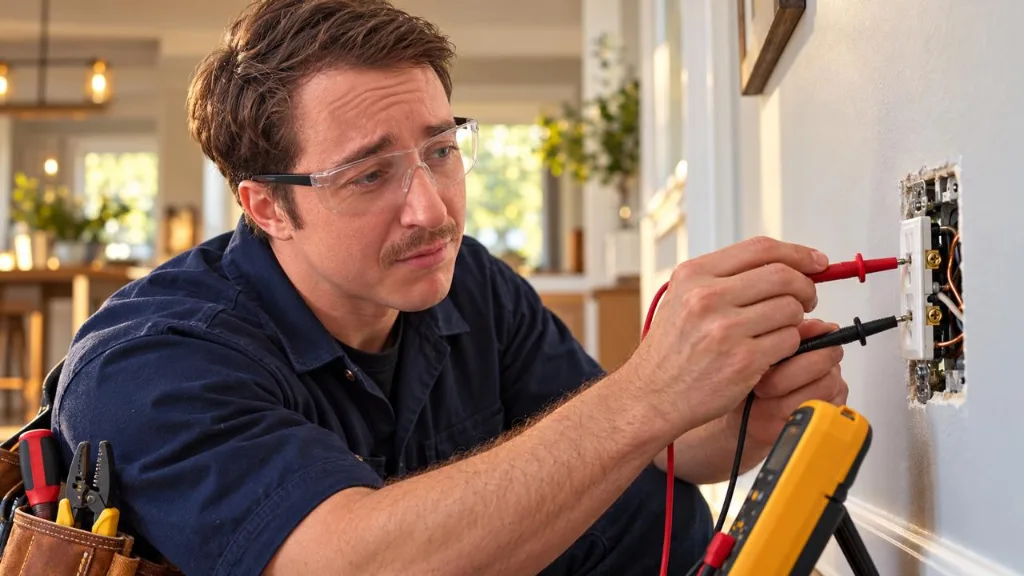
A flickering light. A breaker that trips again. An outlet you have learned not to use. Small electrical annoyances can become part of the daily routine surprisingly quickly.
Here are five warning signs worth noticing, what you can observe safely, and when to bring in a qualified electrician.
1Lights that keep flickering
A light that flickers every evening is easy to stop noticing. Before you blame the bulb, pay attention to the pattern: one fixture, one room, or several rooms at once.
- How to spot it: note when it happens and what else is running. That information is useful when you arrange an inspection.
- Safe first step: switch the light off. Leave wiring, switches and fixture connections closed.
- Call an electrician if: the flicker repeats, affects multiple lights, or comes with buzzing or a burning smell.
2Breakers that trip repeatedly
A tripped breaker interrupts your day, but it is also interrupting a potentially unsafe condition. Repeated trips deserve attention rather than another automatic reset.
- How to spot it: write down which circuit trips and which appliances were operating.
- Safe first step: stop using the affected circuit until it has been checked. Do not keep resetting a breaker that trips again.
- Call an electrician if: trips recur. Never fit a higher-rated breaker as a workaround; the circuit needs assessment.
3Warm or discolored outlets
A wall plate with brown marks or heat damage is not a cosmetic problem. Warm outlets and switches can be warning signs of an unsafe electrical condition.
- How to spot it: look for discoloration, melting or a damaged faceplate. Do not touch a suspect outlet to test its temperature.
- Safe first step: stop using it. Do not remove the cover or pull on a hot or damaged plug.
- Call an electrician if: you notice heat, discoloration or damage. Keep the outlet out of use while waiting.
4Buzzing, crackling or a burning smell
Unusual sound or odor around an outlet, switch or panel is a reason to act. It is not something to investigate by opening the cover yourself.
- How to spot it: notice where the sound or smell comes from without approaching damaged equipment.
- Safe first step: stop using the affected equipment and keep people away.
- Get urgent help if: there is smoke, flame or ongoing sparking. Leave the home and call 911 from outside. Do not use water on an electrical fire.
5Extension cords that become permanent
An extension cord across the room can quietly become part of the furniture. If your everyday routine depends on one, the room may need a better electrical setup.
- How to spot it: look for cords supplying appliances day after day, or power strips plugged into other strips.
- Safe first step: use extension cords temporarily only. Do not use damaged cords or run large appliances from extension cords.
- Plan a professional visit if: you need additional outlets or circuits. More sockets on a power strip do not increase the circuit’s capacity.
When to call a pro
Arrange an inspection when a warning sign appears. If a switch or appliance gives you even a mild shock or tingle, stop using it and have it checked. A useful service request describes the location, the symptom and when it happens—you do not need to diagnose the fault first.
Safety references: Electrical Safety Foundation International, Electrical Safety Dos, Home Wiring Safety Tips and Don’t Overload Your Home.
Back to all posts